+ + +
Educators contribute to the profession.
+ + +
Teaching Environmental Sustainability
“It is crystal clear we are in a great transition period as we have to shift to sustainability. This shift has to be accompanied by a fundamental transformation in the way we perceive the world. And that, I believe, is strongly shaped in the early years of life. I believe the most critical period is K to Grade 4 as children acquire beliefs and values that become the lenses through which we perceive the world. You are doing (next to parents) the most important job in education.” — David Suzuki
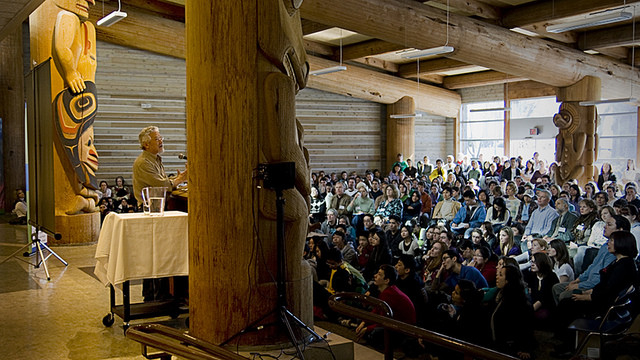
The CITE Cohort and the David Suzuki Lecture
During the year, the CITE cohort lead a student initiative to organize a David Suzuki presentation for the UBC Education faculty and students. At the event, David Suzuki talked about teaching environmental sustainability and he made great links about the importance of connecting and understanding our place with the earth. When we forget that we need … The earth, the soil, water and air … We seem to do the most illogical things with them.
Reconnecting Ecology and Economy
In order, for our species to survive, we need to transform our thinking. We need to change our energy and consumption patterns. We have to question our goals of material wealth. Do we really need corporations to always dramatically improve profits every year? Maybe this recession is a wake up call to re-examine our priorities? As David Suzuki said to us in March, “We have to find some harmony between our ecology and our economy — after all — they have a common root.”
Our Role In Shifting Perspectives
David Suzuki said the biggest way to implement change is through reaching society’s children. With our messages and engaging lessons, children have the potential to shift their parents thinking and actions. As teachers, we have the potential to make a gigantic impact on our future.
The Power Of People
The event was a huge success and our CITE cohort created a wonderful and inspiring contribution to our profession. It was a powerful example of the endless possibilities of a school community working together.

 Looking and Learning